팩토리 패턴(Factory pattern)
- 객체를 만드는 과정에 중요성을 둔 느슨한 결합
- 불필요한 의존성 없앨 수 있음
팩토리 패턴이 필요한 이유
구상(concrete)?
- 추상(abstract)와 대조적인 단어
- 구상 클래스(concrete class)란 new 키워드로 객체를 생성할 수 있는 클래스
- 구상 객체란 new 키워드로 만든 객체, 인스턴스
구상 클래스들이 많다는 건 아래와 같이 코드가 짜여있다는 말이다
Pizza pizza;if(cheese) {pizza = new CheesePizza();} else if (greek) {pizza = new GreekPizza();} else if (pepperoni) {pizza = new PepperoniPizza();}
이 코드를 보면 변경하거나 확장해야 할 때 코드를 다시 확인하고 추가하고 제거해야한다는 걸 뜻한다. 즉, 이런식으로 코드를 만들면 갱신하기가 어려워지고 오류가 생길 가능성이 높다.
문제는 변화(mutation)이다. 인터페이스에 맞춰서 코딩을 하면 시스템에서 일어날 수 있는 여러 변화를 이겨낼 수 있다. 반대로 구상 클래스를 많이 사용하면 새로운 구상 클래스가 추가될 때마다 코드를 고쳐야 하기 때문에 문제가 생길 수 있다.
팩토리 패턴 만드는법
바뀌는 부분과 바뀌지 않는 부분 찾아내기
function orderPizza(type) {let pizza;// ❗️바뀔 수 있는 부분if (type === "cheese") {pizza = new CheesePizza();} else if (type === "greek") {pizza = new GreekPizza();} else if (type === "pepperoni") {pizza = new PepperoniPizza();}// ❗️바뀌지 않는 부분pizza.prepare();pizza.bake();pizza.cut();pizza.box();return pizza;}// Example usage:const pizza = orderPizza("cheese");
바뀔 수 있는 부분은 인스턴스를 만들 구상 클래스를 선택하는 부분이다. 즉, 객체 생성 부분을 캡슐화해야한다. 이 부분을 팩토리라는 클래스로 캡슐화 할 할것이다.
class SimplePizzaFactory {createPizza(type) {let pizza = null;if (type === "cheese") {pizza = new CheesePizza();} else if (type === "greek") {pizza = new GreekPizza();} else if (type === "pepperoni") {pizza = new PepperoniPizza();}return pizza;}}
이렇게 하면 클라이언트 코드 내에서 구상 클래스의 인스턴스를 만드는 코드를 전부 없앨 수 있다. 아래는 코드 전문이다.
Simple factory
class Pizza {prepare() {console.log(`Preparing ${this.constructor.name}`);}bake() {console.log("Baking " + this.constructor.name);}cut() {console.log("Cutting " + this.constructor.name);}box() {console.log("Boxing " + this.constructor.name);}}class CheesePizza extends Pizza {}class GreekPizza extends Pizza {}class PepperoniPizza extends Pizza {}// 팩토리를 만들어서 클라이언트에 대한 인스턴스 생성 캡슐화class SimplePizzaFactory {createPizza(type) {let pizza = null;if (type === "cheese") {pizza = new CheesePizza();} else if (type === "greek") {pizza = new GreekPizza();} else if (type === "pepperoni") {pizza = new PepperoniPizza();}return pizza;}}class PizzaStore {constructor(factory) {this.factory = factory;}orderPizza(type) {const pizza = this.factory.createPizza(type);pizza.prepare();pizza.bake();pizza.cut();pizza.box();return pizza;}}// 사용 :const factory = new SimplePizzaFactory();const store = new PizzaStore(factory);const cheesePizza = store.orderPizza("cheese");const pepperoniPizza = store.orderPizza("pepperoni");const veggiePizza = store.orderPizza("veggie");
SimplePizzaFactory 클린한 함수로 구현
function simplePizzaFactory(type) {const PIZZA_TYPE = {cheese: new CheesePizza(),greek: new GreekPizza(),pepperoni: new PepperoniPizza(),};return PIZZA_TYPE[type];}
Factory method pattern
객체를 생성하기 위한 인터페이스를 정의하는데 어떤 클래스의 인스턴스를 만들지는 서브 클래스에서 결정하게 만드는 것
class Pizza {constructor() {this.name = "";this.dough = "";this.sauce = "";this.toppings = [];}// 피자 준비 과정에서 몇 가지 정해진 단계를 따라야 한다.prepare() {console.log(`Prepare ${this.name}`);console.log("Tossing dough...");console.log("Adding sauce...");console.log("Adding toppings: ");this.toppings.forEach((topping) => {console.log(` ${topping}`);});}// 추상 클래스에서 피자를 굽고, 자르고, 상자에 담는 일에 몇 가지 기본 값을 제공한다.bake() {console.log("Bake for 25 minutes at 350");}cut() {console.log("Cut the pizza into diagonal slices");}box() {console.log("Place pizza in official PizzaStore box");}getName() {return this.name;}}// 서브클래스class CheesePizza extends Pizza {constructor() {super();this.name = "Cheese Pizza";this.dough = "Regular Crust";this.sauce = "Marinara Pizza Sauce";this.toppings = ["Fresh Mozzarella", "Parmesan"];}}class GreekPizza extends Pizza {constructor() {super();this.name = "Greek Pizza";this.dough = "Thin Crust";this.sauce = "Garlic Sauce";this.toppings = ["Olives", "Feta Cheese", "Spinach"];}}class PepperoniPizza extends Pizza {constructor() {super();this.name = "Pepperoni Pizza";this.dough = "Crust";this.sauce = "Marinara sauce";this.toppings = ["Sliced Pepperoni", "Sliced Onion", "Grated parmesan cheese"];}}const pizza = new CheesePizza();pizza.prepare();pizza.bake();pizza.cut();pizza.box();
- 생산자(creator) 클래스 : GreekPizza, PepperoniPizza, CheesePizza
- 제품(product) 클래스 : Pizza
다른 예
// 인터뷰 보는 사람들의 인터페이스class Developer {askQuestions() {console.log("Asking about design patterns!");}}class CommunityExecutive {askQuestions() {console.log("Asking about community building");}}// 인사담당자의 클래스class HiringManager {takeInterview() {const interviewer = this.makeInterviewer();interviewer.askQuestions();}}// 필요한 면접관을 제공 (서브클래스)class DevelopmentManager extends HiringManager {makeInterviewer() {return new Developer();}}class MarketingManager extends HiringManager {makeInterviewer() {return new CommunityExecutive();}}// 사용const devManager = new DevelopmentManager();devManager.takeInterview(); // Output: Asking about design patternsconst marketingManager = new MarketingManager();marketingManager.takeInterview(); // Output: Asking about community building.
클라이언트가 필요한 하위 클래스를 모르는 경우 사용
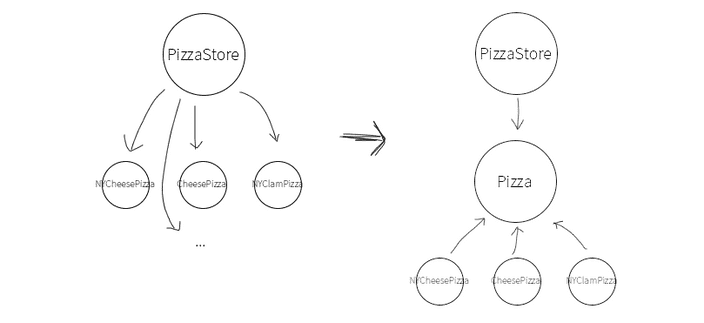
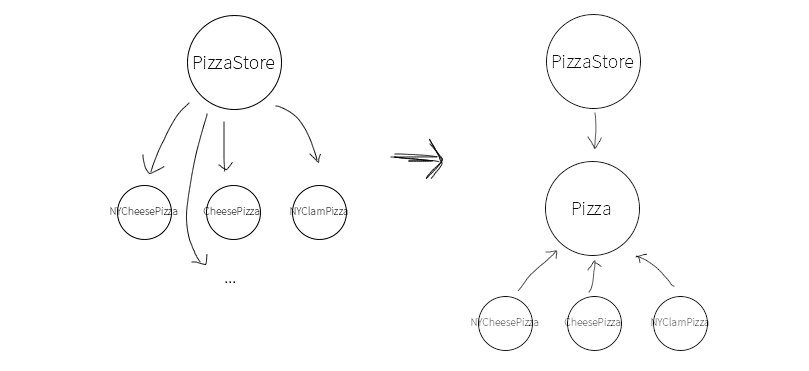
추상 팩토리 패턴을 설명하기 앞서 의존성 뒤집기 원칙에 대해 알아보자.
의존성 뒤집기 원칙(Dependency Inversion Principle)
- 추상화된 것에 의존하게 만들기
- 고수준 구성요소(인터페이스)가 저수준 구성요소(구현체)에 의존하면 안됨
추상 팩토리 패턴 (Abstract Factory)
- 구체적인 클래스를 지정하지 않고 개발적이지만 관련있는 팩토리를 함께 그룹화 하는 펙토리
- 구체적인 클래스를 지정하지 않고 공통 주제를 가진 개별 팩토리 그룹을 캡슐화 하는 방법
// Pizza 인터페이스class PizzaIngredientFactory {createDough() {throw new Error("This method must be overridden!");}createSauce() {throw new Error("This method must be overridden!");}createCheese() {throw new Error("This method must be overridden!");}createVeggies() {throw new Error("This method must be overridden!");}createPepperoni() {throw new Error("This method must be overridden!");}createClams() {throw new Error("This method must be overridden!");}}// 뉴욕 피자 팩토리 클래스class NYPizzaIngredientFactory extends PizzaIngredientFactory {createDough() {return new ThinCrustDough();}createSauce() {return new MarinaraSauce();}createCheese() {return new ReggianoCheese();}createVeggies() {return [new Garlic(), new Onion(), new Mushroom(), new RedPepper()];}createPepperoni() {return new SlicedPepperoni();}createClams() {return new FreshClams();}}// 시카고 피자 팩토리 클래스class ChicagoPizzaIngredientFactory extends PizzaIngredientFactory {createDough() {return new ThickCrustDough();}createSauce() {return new PlumTomatoSauce();}createCheese() {return new MozzarellaCheese();}createVeggies() {return [new BlackOlives(), new Spinach(), new EggPlant()];}createPepperoni() {return new SlicedPepperoni();}createClams() {return new FrozenClams();}}// 피자 클래스class Pizza {constructor() {this.name = "";this.dough = null;this.sauce = null;this.veggies = [];this.cheese = null;this.pepperoni = null;this.clams = null;}prepare() {throw new Error("This method must be overridden!");}bake() {console.log("Bake for 25 minutes at 350");}cut() {console.log("Cutting the pizza into diagonal slices");}box() {console.log("Place pizza in official PizzaStore box");}getName() {return this.name;}}// CheessePizzaclass CheesePizza extends Pizza {constructor(ingredientFactory) {super();this.ingredientFactory = ingredientFactory;this.name = "Cheese Pizza";}prepare() {console.log("Preparing " + this.name);this.dough = this.ingredientFactory.createDough();this.sauce = this.ingredientFactory.createSauce();this.cheese = this.ingredientFactory.createCheese();}}// 피자 재료 클래스들 (예시)class ThinCrustDough {}class MarinaraSauce {}class ReggianoCheese {}class Garlic {}class Onion {}class Mushroom {}class RedPepper {}class SlicedPepperoni {}class FreshClams {}class ThickCrustDough {}class PlumTomatoSauce {}class MozzarellaCheese {}class BlackOlives {}class Spinach {}class EggPlant {}class FrozenClams {}// 사용const nyFactory = new NYPizzaIngredientFactory();const chicagoFactory = new ChicagoPizzaIngredientFactory();const nyCheesePizza = new CheesePizza(nyFactory);nyCheesePizza.prepare();nyCheesePizza.bake();nyCheesePizza.cut();nyCheesePizza.box();console.log("Ordered a " + nyCheesePizza.getName());const chicagoCheesePizza = new CheesePizza(chicagoFactory);chicagoCheesePizza.prepare();chicagoCheesePizza.bake();chicagoCheesePizza.cut();chicagoCheesePizza.box();console.log("Ordered a " + chicagoCheesePizza.getName());
프론트앤드에서의 팩토리패턴
React에선 이미 컴포넌트를 구성할 때 팩토리 패턴을 사용하고 있었다.
import React, { createFactory } from "react";const MyComponent = ({ name }) => {return <div>Hello, {name}!</div>;};const MyFactory = createFactory(MyComponent);export default function App() {return <MyFactory name="John Doe" />;}
const CarFactoryComponent = (carModel, brandName, color) => {<div brandName={brandName} carModel={carModel} color={color} />;};const ToyotaCamry = () => {<CarFactoryComponent brandName="toyota" carModel="camry" color="black" />;};const FordFiesta = () => {<CarFactoryComponent brandName="ford" carModel="fiesta" color="blue" />;};
function renderSimpleUser() {// ...return <User {...userProps}>}function renderComplexUser() {// ...return <User {...userProps}>}const userComponent1 = renderSimpleUser(api.getSimpleUser());const userComponent2 = renderComplexUser(api.getComplexUser());